
Mount Kenya Hiking Routes: The Complete 2026 Guide to Sirimon, Chogoria & Naro Moru
Everything first-time and experienced trekkers need to plan a safe, guided climb to Point Lenana
By Mount Kenya Hiking | mountkenyahiking.com
Mount Kenya is Africa’s second-highest mountain and one of the continent’s most rewarding high-altitude treks. Unlike Kilimanjaro, which is a single, well-known trekking summit, Mount Kenya offers two mountains in one: a non-technical trek to Point Lenana (4,985m) that any reasonably fit hiker can achieve with the right guide, and serious technical rock climbing on the twin peaks of Batian (5,199m) and Nelion (5,188m) for experienced climbers. With around 15,000 visitors a year, far fewer than Kilimanjaro, Mount Kenya also feels wilder, quieter, and more personal.
This guide covers the three main trekking routes, how to choose between them, the best time of year to climb, what a guided itinerary looks like, and why having an experienced, KWS-trained guide changes the entire experience.
Why Climb Mount Kenya
Mount Kenya National Park is a UNESCO World Heritage Site, and for good reason. In a single trek, hikers pass through five distinct ecological zones: cultivated farmland, dense montane forest, bamboo and giant heather, open alpine moorland filled with otherworldly giant groundsels and lobelias, and finally bare rock and glacier near the summit. Few mountains anywhere offer that kind of variety in three to six days of walking.
The mountain also holds deep cultural significance in Kenya. Local communities have long regarded it as a sacred meeting place, and it is the source of the country’s name. For Kenyan and international trekkers alike, reaching Point Lenana is as much a cultural experience as a physical one.
Compare the Three Main Mount Kenya Hiking Routes
Mount Kenya has several recognised approaches, but three routes account for the large majority of guided treks. Each has a different character, and most experienced operators recommend combining two of them, ascending on one side and descending on another, to improve both acclimatisation and scenery.
Sirimon Route
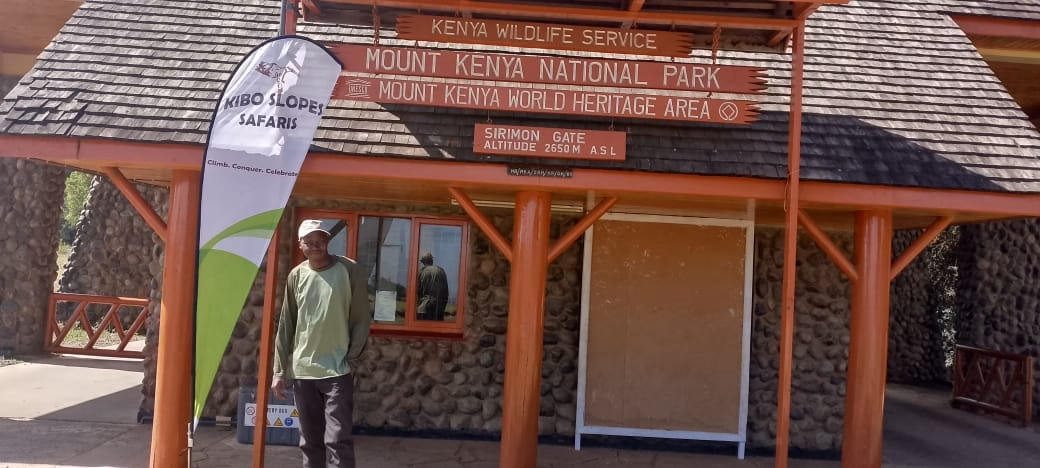
Sirimon approaches from the northwest, near Nanyuki, and is widely considered the best route for first-time high-altitude trekkers. It has the most gradual ascent profile of the three main routes, which gives the body more time to adjust to the thinning air. The trail is well-maintained, mountain huts are reliable, and the drier northern aspect makes it a strong choice even outside the driest months. Most guided itineraries use Sirimon for the ascent.
Chogoria Route
Chogoria enters from the east and is consistently rated the most scenic of the three routes. Hikers pass through dense bamboo forest and the dramatic Gorges Valley, with waterfalls, alpine tarns, and sweeping views that the other routes do not offer. Chogoria is frequently used as the descent route after a Sirimon ascent, giving trekkers the best of both worlds: a gentle, acclimatising climb up and a spectacular, memorable descent down.
Naro Moru Route
Naro Moru is the shortest and most direct route to Point Lenana, approaching from the west near Naro Moru town. It is popular with hikers on a tighter schedule, but the speed comes at a cost: a notably steep profile and a muddy, demanding section known locally as the Vertical Bog. Because the ascent is faster, there is less time to acclimatise, so Naro Moru is often recommended as a descent route, or for hikers who are already well acclimatised from a previous high-altitude trek.
| Route and approach | Our trip lengths | Best suited to | Terrain and overnight planning |
|---|---|---|---|
| Sirimon Northwest, near Nanyuki | 4-day return or 5-day traverses | Trekkers looking for a more gradual approach | Forest and moorland; Old Moses and Shipton’s Camp feature on the route. |
| Chogoria Eastern approach | 5-day return or traverse; 6 days to Sirimon | Scenery, lakes and photography | Bamboo forest and Gorges Valley; check the selected itinerary for camps and accommodation. |
| Naro Moru Western approach, near Naro Moru town | 4-day return or 5-day traverses | Experienced, already acclimatised hikers considering a direct ascent | Steeper ascent and the Vertical Bog; check overnight stops before choosing a shorter trip. |
These durations refer to our full itineraries, including descent. Accommodation and overnight stops depend on the route combination. Compare hiking prices and inclusions before choosing, and ask us to recommend a route for your dates and experience.
Best Time to Climb Mount Kenya
Mount Kenya can be climbed year-round, but conditions are noticeably better in the two dry seasons: January to March and July to October. During these windows, trails are firmer, visibility at the summit is far better, and the chance of being rained or snowed off the final push to Point Lenana is much lower. Outside these months, the mountain still sees regular guided treks, but hikers should expect more mud, especially on routes like Naro Moru, and should pack accordingly.
A Typical Guided Itinerary
Most guided treks to Point Lenana take between four and six days, depending on the route combination and how much time is built in for acclimatisation. A typical structure looks like this:
- Day 1: Drive from Nairobi or Nanyuki to the Sirimon Gate, trek through forest and moorland to the first overnight camp.
- Day 2: Continue up through alpine moorland, with giant groundsels and lobelias lining the trail, to a high camp such as Mackinder’s or Shipton’s.
- Day 3: Acclimatisation day, with a short walk to higher ground and back down to sleep, followed by an early pre-dawn start for the summit push.
- Day 4: Summit Point Lenana before sunrise, then descend via the Chogoria or Naro Moru route to a lower camp.
- Day 5-6: Continue the descent through bamboo and rainforest, reaching the park gate and transferring back to Nairobi or Nanyuki.
Shorter three to four day itineraries are possible on Naro Moru alone, but they trade acclimatisation time for speed, and are best suited to fit, experienced trekkers.
Why Guiding Experience Matters
Mount Kenya’s biggest risk is not technical difficulty on the trekking routes, it is altitude. Point Lenana sits at nearly 5,000 metres, and altitude sickness can affect even fit, experienced hikers if the ascent is rushed. A guide’s value lies less in showing the way, since the main trails are well marked, and more in pacing the climb correctly, recognising early signs of altitude sickness, and making the right call about when to push on, rest, or turn back.
This is where a guide’s depth of experience and formal training make a real, practical difference. Mount Kenya Hiking’s lead guide, Patrick Kinyua, has 25 years of experience on the mountain and has received specialised training from the Kenya Wildlife Service in mountain safety, wildlife awareness, and emergency response. Combined with over 10 years of organising treks through Mount Kenya Hiking’s founder Charles Kimiti, this is the kind of experience that turns a demanding trek into a safe, well-managed, and genuinely memorable one, on all three major routes.
Planning Your Trek
Whichever route you choose, a successful Mount Kenya trek comes down to three things: proper acclimatisation, an experienced guide who can read both the mountain and your body, and realistic expectations about how demanding high altitude can be even on a non-technical route.
Mount Kenya Hiking offers guided treks on the Sirimon, Chogoria, and Naro Moru routes, led by KWS-trained guides with over a decade of experience organising safe, well-paced expeditions to Point Lenana. Whether you are after a gentle first high-altitude trek or a scenic traverse with a spectacular descent, get in touch to start planning your route.
Our Mount Kenya Itineraries
Nine guided itineraries across the three main routes — each one day by day, with what it costs and what is included.
Sirimon Route
- Sirimon Route4 days · out and back
- Sirimon to Chogoria5 days · traverse
- Sirimon to Naro Moru5 days · with acclimatisation day
Chogoria Route
- Chogoria Route5 days · out and back
- Chogoria to Sirimon6 days · our most popular
- Chogoria to Naro Moru5 days · traverse
Naro Moru Route
- Naro Moru Route4 days · fastest ascent
- Naro Moru to Sirimon5 days · traverse
- Naro Moru to Chogoria5 days · traverse
Looking for something quieter? See Timau, Burguret and Kamweti, the routes that see a handful of parties a year.
Once you choose a route, check the Mount Kenya climbing cost guide and prepare with the complete packing list.