
When travellers compare Mount Kenya hiking packages, they normally see a price, a route and an itinerary. They are far less likely to see how the crew’s wages are calculated, or how much of the package price reaches the people working on the mountain.
Exact rates vary between operators and change over time. But every responsible trekking budget should provide for guaranteed daily wages, full payment for entrance and exit days, separate and voluntary tips, reasonable porter loads, crew meals and drinking water, suitable shelter and equipment, transport and other logistical costs, and clear payment procedures.
What we pay our crew
We do not think an operator should argue for a standard without saying whether it meets it. So before the general guidance below, here is what Mount Kenya Hiking guarantees its own mountain crew.
| Crew position | Guaranteed daily wage |
|---|---|
| Guide | US$50 |
| Cook | US$25 |
| Porter | US$20 |
Every day on the mountain itinerary is paid in full, including the entrance and exit days. These wages are guaranteed by us and are paid whether or not a guest chooses to tip. Tips are separate, voluntary, and go directly to the crew.
These rates are subject to change. They are reviewed periodically and may be adjusted — for example with the cost of living, changes to park charges, or a general review of pay. The figures published here apply as at August 2026. The rates that apply to your trek are the ones we confirm to you in writing at the time of booking, and you are welcome to ask for them before you pay a deposit.
A typical daily crew-wage budget
The rates above are also the ones used in the worked examples throughout this guide. A reasonable crew-wage calculation for a professionally operated Mount Kenya trek might use rates such as US$50 for a guide, US$25 for a cook and US$20 for a porter, per day.
These are illustrative industry benchmarks, not compulsory government rates. Individual operators may pay more, or structure wages differently. What matters is that the rate is:
- Agreed before the trek
- Guaranteed by the operator
- Paid for every working day
- Not reduced according to group size or season
- Separate from optional tips
- Communicated clearly to the worker
Travellers should ask an operator for its current crew rates before booking.
What should count as a paid working day
Every calendar day spent working on the mountain should normally count as a paid day. That includes:
- The day the expedition enters Mount Kenya
- Every full day on the mountain
- Summit day
- The day the expedition exits the mountain
Entrance and exit days should be paid at the full daily rate, even if the crew spends only part of the day inside the park. A worker still has to prepare, report for duty, travel, handle equipment, support the group and remain available for the expedition. Reaching the exit gate in the afternoon does not make that day an unpaid day.
If the day appears on the mountain itinerary and the crew works that day, it is a paid working day.
Why entrance and exit days matter
Excluding entrance and exit days can substantially reduce a worker’s earnings. Consider a porter on a five-day trek at $20 per day:
| Payment method | Calculation | Porter’s wage |
|---|---|---|
| All itinerary days paid | $20 × 5 days | $100 |
| Entrance and exit excluded | $20 × 3 days | $60 |
| Difference | Two days removed | −$40 |
Excluding two days reduces the porter’s wage by 40 per cent. The same principle applies to guides and cooks. Full payment for every working day should therefore be built into the original trek budget, not treated as an extra.
Typical total wages by trek length
Using the example daily rates, individual base wages would be:
| Trek length | Guide | Cook | Each porter |
|---|---|---|---|
| 4 days | $200 | $100 | $80 |
| 5 days | $250 | $125 | $100 |
| 6 days | $300 | $150 | $120 |
| 7 days | $350 | $175 | $140 |
These are base wages only. They do not include tips, crew food, transport, accommodation, equipment, insurance or administrative costs.
Example crew cost for a five-day trek
Suppose a five-day Mount Kenya expedition uses one guide, one cook and four porters. The example wage bill would be:
| Crew | Calculation | Total |
|---|---|---|
| One guide | $50 × 5 days | $250 |
| One cook | $25 × 5 days | $125 |
| Four porters | 4 × $20 × 5 days | $400 |
| Total crew wages | $775 |
This does not mean every group requires four porters. The number depends on the number of hikers, the route, trek duration, camping or hut arrangements, quantity of food and fuel, group equipment, guests’ luggage, porter load limits and any additional services requested.
A larger group or a camping itinerary may need more equipment and therefore more porters. A smaller group does not necessarily mean a proportionally smaller crew, because a guide, a cook, safety equipment, food and essential camping supplies may still be required.
Crew wages are only part of the cost
The wage bill should not be confused with the full cost of supporting a mountain team. A responsible operator must also budget for crew transport to and from the mountain, meals throughout the expedition, drinking water or treatment, cooking fuel, sleeping arrangements, suitable mountain equipment and its maintenance, park or access charges where applicable, medical support, emergency arrangements, and administration and payment costs.
A package may appear cheap because some of these costs have not been included. In that case the cost does not disappear. It is transferred to the worker, added to the guest’s bill later, or absorbed as lower standards on the mountain.
Wages and tips should be separate
A wage is what the operator owes a worker for performing the job. A tip is an optional payment from the guest recognising good service. Responsible practice keeps these two separate.
The crew should receive its full wage whether guests tip generously, leave a modest tip, divide the gratuity unevenly, or decide not to tip at all.
An operator should never use anticipated tips to justify a lower wage. The trek price should be sufficient to cover guaranteed crew wages before any gratuity is considered.
How tipping should work
Tips should generally be voluntary, open-ended, based on the guest’s satisfaction, additional to base wages, given directly to the crew, and distributed through a transparent process.
Guests should be free to decide whether to tip and how much. There does not have to be a compulsory upper or lower amount. A guest may weigh the quality of the guiding, safety management, helpfulness of the crew, quality of the meals, professionalism, care shown to the group, and any exceptional assistance during a difficult moment. A guest who is especially happy with the service should be free to give more.
Tips should reach the people who did the work
Tips should go to the guides, cooks and porters who supported the expedition. A transparent process lets guests tip each worker individually, give different amounts according to service and responsibility, ask for the name and role of every crew member, present one group tip with clear distribution instructions, or hand over tips openly in front of the team.
Operators should not treat crew tips as company income, deduct tips from guaranteed wages, retain an unexplained portion, force tips through several intermediaries, or advertise tips as though they formed part of the base wage.
Open distribution lets guests see who receives the money, and gives workers the chance to confirm what has been allocated to them.
What hikers should ask before booking
Before choosing a Mount Kenya operator, ask:
- What is the guaranteed daily wage for a guide?
- What is the guaranteed daily wage for a cook?
- What is the guaranteed daily wage for a porter?
- Are entrance and exit days paid in full?
- Are tips separate from wages?
- How and when are wages paid?
- How many crew members will support the group?
- How is the required number of porters calculated?
- What is the porter load limit?
- Does that limit include the porter’s personal equipment?
- What food and drinking water are provided to the crew?
- Where do crew members sleep?
- What happens if a worker becomes sick or injured?
- How are tips distributed?
- Do tips go directly to the crew?
A credible operator should be able to answer these questions clearly.
Avoid comparing packages by price alone
Two Mount Kenya packages with the same route and the same number of days may be run to very different standards. A lower price may reflect genuine efficiency — or it may result from lower crew wages, unpaid entrance or exit days, too few porters, excessive loads, inadequate crew meals, poor sleeping arrangements, missing safety provisions, worn equipment, excluded transport, or fees added after booking.
A high price does not automatically prove an operator treats its crew well either. Ask for specific policies rather than relying on words such as “ethical” or “responsible”.
A practical standard for responsible crew pay
A clear Mount Kenya crew-payment policy should establish that:
- Daily rates are agreed before the trek.
- Every working day is paid.
- Entrance and exit days receive full payment.
- Wages do not depend on tips.
- Tips are voluntary and open-ended.
- Tips go directly to the crew.
- The number of porters is based on actual loads and safe working practices.
- Crew food, shelter, transport and welfare are included in the operating budget.
- Workers can confirm what they are owed.
- Guests can ask how the crew cost was calculated.
Using example rates of $50 for a guide, $25 for a cook and $20 for a porter gives a simple way to demonstrate the calculation. Operators may pay different or higher rates, but the underlying principles should remain the same.
The people behind the trek
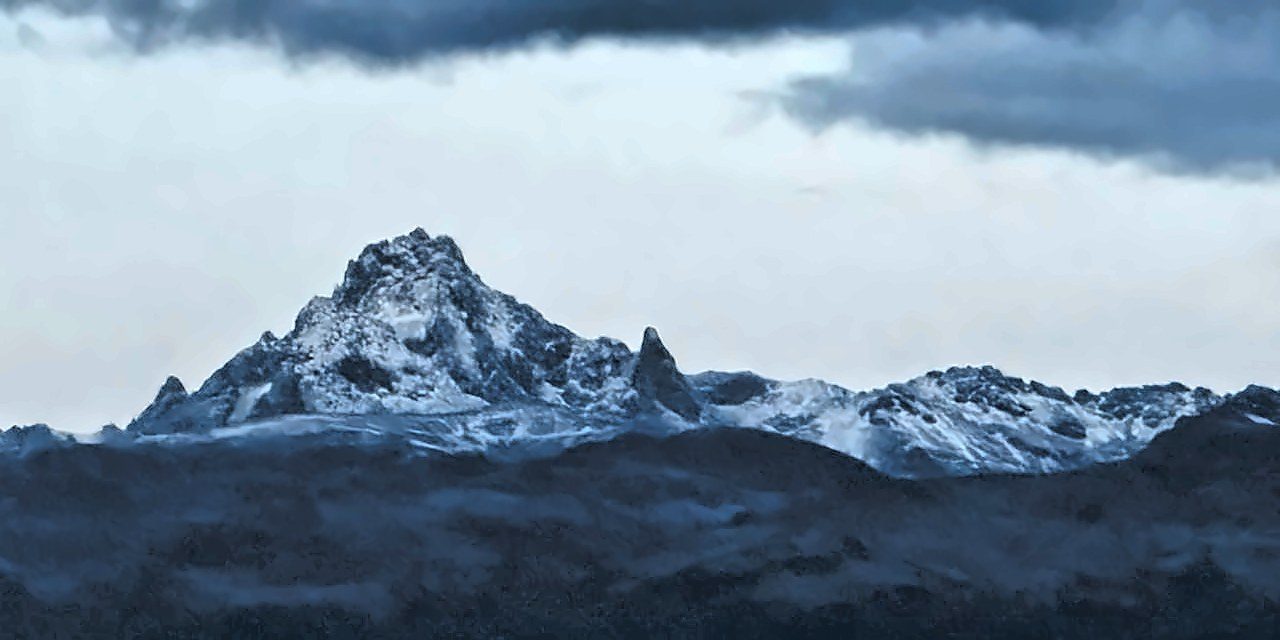
Mount Kenya is usually presented through photographs of Point Lenana at sunrise, the peaks of Batian and Nelion, alpine lakes, valleys, glaciers and giant high-altitude vegetation.
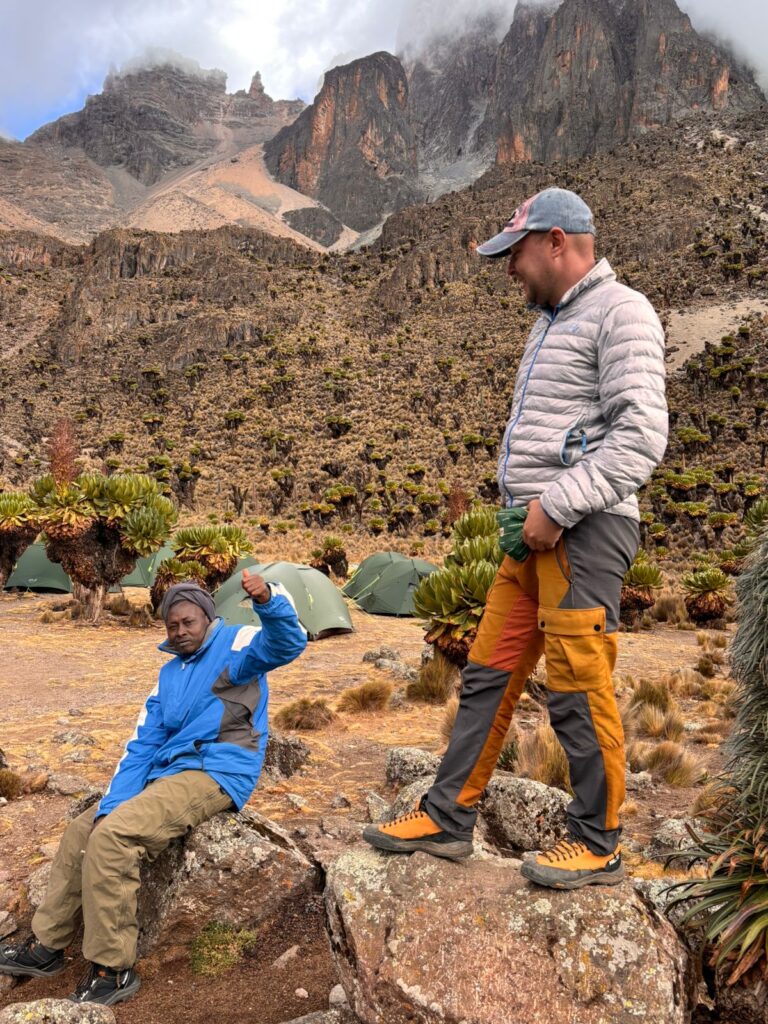
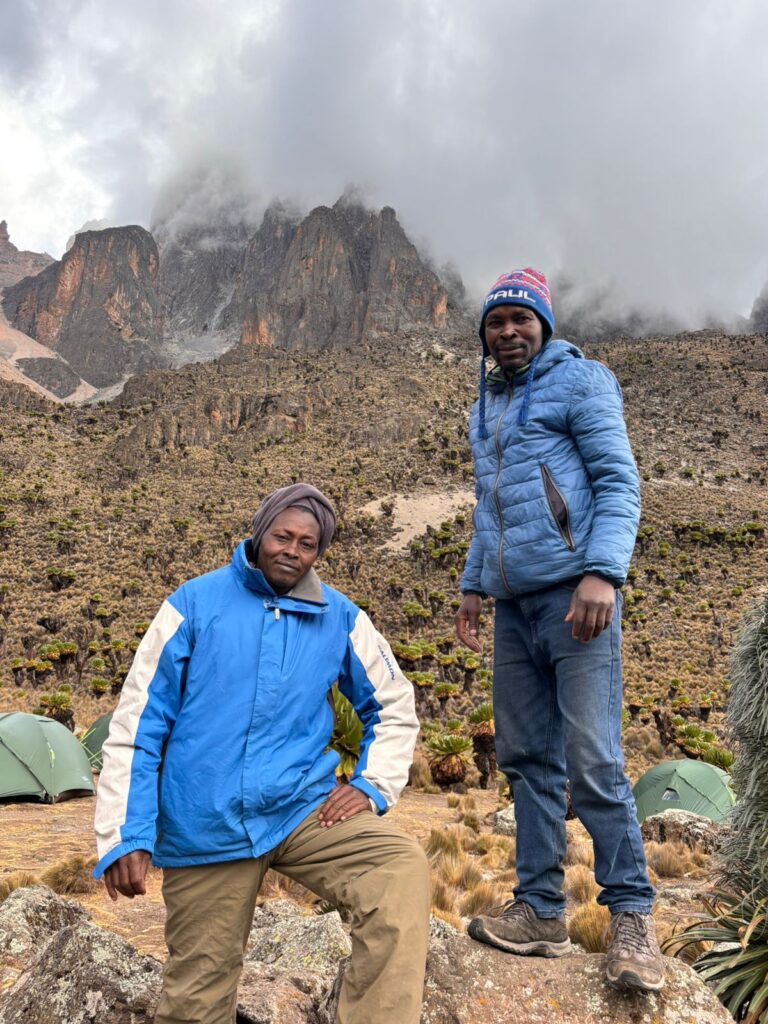
Behind every supported trek is a team of people carrying supplies, preparing meals, establishing camp, monitoring conditions, guiding the route and helping guests move safely through a demanding mountain environment. Those workers should not be invisible when travellers compare hiking packages.
Before booking, ask what the crew is paid, which days are paid, how porter loads are managed, and whether tips go directly to the people doing the work.
A responsible Mount Kenya trek should be good for the guest without being unfair to the crew.