
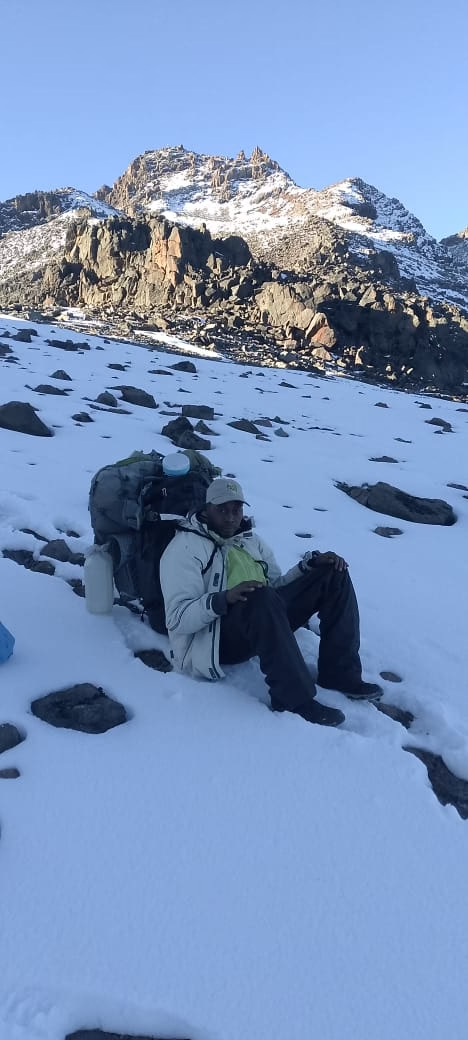
Point Lenana vs Kilimanjaro: Which Should You Climb?
An honest comparison of Africa’s two great trekking summits, and why many climbers eventually do both
By Mount Kenya Hiking | mountkenyahiking.com
Kilimanjaro is the mountain most people have heard of. At 5,895m, it is Africa’s tallest peak and one of the world’s most famous trekking summits. Mount Kenya, at 5,199m, sits quietly in its shadow, despite offering a genuinely comparable trekking experience, far fewer crowds, and a lower price tag. If you’re trying to decide between the two, or wondering whether you need to choose at all, here is an honest, practical comparison.
The Basic Comparison
It helps to be precise about what’s actually being compared. Kilimanjaro’s summit, Uhuru Peak, is a single non-technical trekking summit at 5,895m. Mount Kenya is different: its true summits, Batian (5,199m) and Nelion (5,188m), are serious technical rock climbs, while its trekking summit, Point Lenana (4,985m), is the non-technical goal most visitors aim for. The fair comparison, in other words, is Uhuru Peak versus Point Lenana, both reachable by any reasonably fit trekker with the right guide.
| Point Lenana, Mount Kenya | Uhuru Peak, Kilimanjaro | |
| Summit altitude | 4,985m | 5,895m |
| Typical duration | 4–6 days | 6–8 days |
| Technical skill required | None | None |
| Annual visitors | ~15,000 | Far higher, tens of thousands |
| Typical guided cost | Generally lower per trip, given the shorter itinerary | Generally higher, given the longer itinerary |
| Scenery | Glaciers, jagged granite peaks, alpine lakes, five ecological zones | Single dominant volcanic cone, vast crater, glaciers near the summit |
Where Mount Kenya Has a Real Advantage
Fewer people on the trail
This is the most consistently mentioned difference among climbers who have done both. Kilimanjaro’s popularity means busier camps, more crowded summit pushes, and a less wild feel on the most popular routes. Mount Kenya’s lower visitor numbers mean quieter trails, more solitude at camp, and a stronger sense of being genuinely out in the wilderness.
More varied, dramatic scenery in a shorter trek
Kilimanjaro’s main draw is its sheer scale and the novelty of standing on Africa’s highest point, but the mountain itself is visually a single, vast volcanic cone for much of the trek. Mount Kenya, despite being shorter, packs in dramatic granite spires (Batian and Nelion), alpine tarns, and a rockier, more technical-looking summit zone, all within a shorter, often cheaper itinerary.
Shorter time commitment
A typical Point Lenana trek takes four to six days versus six to eight for Kilimanjaro. For travelers combining a mountain trek with a safari or limited vacation time, that difference matters.
A genuine acclimatisation option
Many experienced trekkers use Mount Kenya specifically as preparation for Kilimanjaro or other high-altitude objectives, since reaching 4,985m gives real, useful altitude experience without committing the time Kilimanjaro requires.
Where Kilimanjaro Has a Real Advantage
It’s higher, and that matters to some climbers
There’s no getting around it: Kilimanjaro’s summit is genuinely higher, and for climbers focused on altitude as the primary goal, particularly those checking off the Seven Summits or simply wanting Africa’s highest point, that distinction is the whole point of the trip.
More infrastructure and route choice
Kilimanjaro’s popularity has produced more established routes (Machame, Lemosho, Marangu and others), more operators, and more flexibility in itinerary length and style, including more comfortable camping options on some routes.
Iconic recognition
Simply put, more people have heard of Kilimanjaro, and for some travelers, the recognition factor of having climbed “the tallest mountain in Africa” is part of the appeal. That’s a legitimate reason to choose it, even if Mount Kenya offers a comparable trekking challenge.
So Which Should You Climb?
If your goal is altitude for its own sake, an established route network, or the specific recognition of Africa’s highest point, Kilimanjaro is the right call. If you want a quieter, more dramatic, shorter, and typically more affordable high-altitude trek, with glaciers and technical peaks in view the whole way, Point Lenana on Mount Kenya is very hard to beat.
The two are not mutually exclusive. A growing number of climbers do Mount Kenya first, both as a genuinely worthwhile destination on its own and as practical altitude preparation, before tackling Kilimanjaro later in the same trip or on a future visit. If you have the time, doing both gives you a genuinely complete picture of East Africa’s two great mountains.
Planning Your Mount Kenya Trek
Whichever mountain you choose, the right guide and a sensible itinerary matter more than the choice of mountain itself. Mount Kenya Hiking has guided treks to Point Lenana for over 10 years on the Sirimon, Chogoria, and Naro Moru routes, led by KWS-trained guides who know exactly how to pace a trek for first-time high-altitude climbers. Get in touch to talk through your dates and decide if Mount Kenya is the right fit, on its own or alongside a future Kilimanjaro trip.
Ready for Point Lenana? Compare the Mount Kenya trekking routes and check the latest Mount Kenya climbing costs.