
Our Mount Kenya hiking FAQs cover everything we are asked most often about climbing Mount Kenya — costs, routes, fitness, gear, altitude and booking. If your question is not here, message us and we will answer it properly.
Mount Kenya Hiking FAQs: Planning Your Climb
Do I need climbing experience to reach the summit?
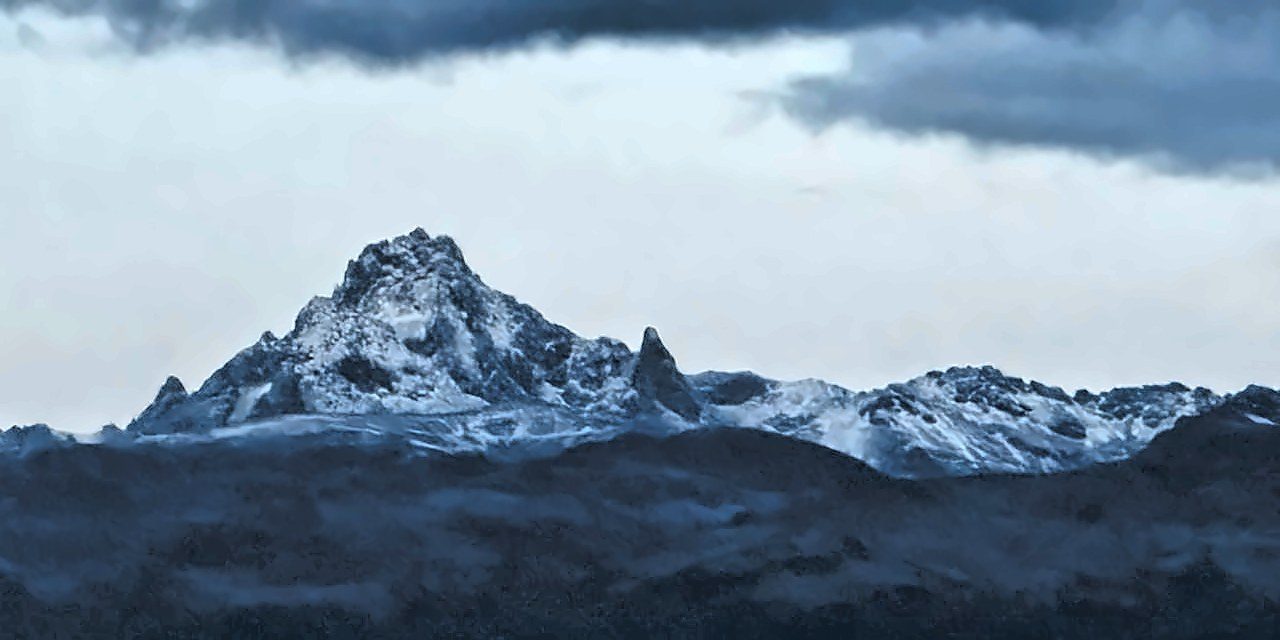
Not for Point Lenana, at 4,985 m the third-highest peak on Mount Kenya and the one most trekkers aim for. It is a walking route — no ropes, no technical climbing. What it demands is stamina and a sensible pace at altitude.
Batian (5,199 m) and Nelion (5,188 m) are different. Those are technical rock climbs requiring ropes, experience and a qualified climbing guide.
How fit do I need to be?
If you can walk for six to seven hours on consecutive days over uneven ground, you can do this trek. Hill walking, stair climbing and long weekend walks with a loaded pack are the most useful preparation. We recommend starting eight to twelve weeks before you travel — our fitness and training guide sets out a full timeline.
When is the best time to climb?
The two dry seasons give the most reliable conditions: January to February and June to October. Skies are clearer, trails are firmer, and summit-day visibility is better. The long rains in April and May and the short rains in November make trails muddy and views unpredictable.
We run treks year-round, and shoulder-season departures are quieter on the mountain.
Which route should I choose?
Three main routes lead to Point Lenana:
- Sirimon — the driest approach, gentlest acclimatisation profile, and the best gradual introduction to the mountain’s vegetation zones.
- Chogoria — the most scenic, passing Lake Ellis and the Gorges Valley.
- Naro Moru — the fastest and steepest, which makes altitude sickness more likely.
Our most popular itinerary ascends Chogoria and descends Sirimon, a traverse that crosses the mountain rather than retracing one path. Our routes guide compares all three in detail.
How many days do I need?
Four to six days for Point Lenana. Five or six gives your body time to acclimatise properly and raises your chance of summiting considerably. Four is possible but leaves no margin.
We also run one-day hikes from Sirimon Gate for visitors who want the forest, bamboo and moorland without summiting.
Pricing and What’s Included
How much does it cost?
We quote one price per person for the whole trek rather than a daily rate: USD 1,000 for four days, USD 1,250 for five, and USD 1,500 for six. Groups of four or more pay less — see the question below.
That price covers your KWS park fees for the full duration, your KWS-certified guide, cook and porters, three cooked meals a day and hot drinks, camping or hut accommodation along the route, tents, sleeping bags and walking sticks, road transport at the start and finish, and drinking water throughout. There is nothing to pay at the gate.
We quote as a single total because the pieces don’t come apart — the park fees, the crew, the food and the transport are all sized to your route, your dates and your group. One number with nothing hiding behind it is more useful to you than a list you have to add up.
A one-day Sirimon hike is USD 200 per person, plus USD 100 per group for transport, and includes park fees, two guides, snacks and water.
Do you offer group discounts?
Yes, and the saving is substantial. A six-day Chogoria–Sirimon traverse is USD 1,080 per person for a group of four or more, against USD 1,500 per person for one or two. Five-day routes come down to USD 900, four-day routes to USD 720.
The reason is simple arithmetic rather than a discount: the guide, the cook and the road transport are largely fixed costs, so the more people share them, the less each person pays. Nothing is reduced from the trek itself — same crew, same meals, same equipment, same park fees.
Travelling solo? Ask anyway. We can sometimes place you with an existing departure, and if we do, you still get your own guide, cook and porter rather than being absorbed into someone else’s trip.
Children are charged a reduced KWS park fee, so a family trip costs noticeably less per head than the adult price suggests — we’ll quote it once we know their ages. What suits a family depends entirely on those ages and on how much walking the children have done before, and we would rather steer you to the right trek than sell you the bigger one.
Is there a budget option?
Yes, and it does bring the price down — we’ll quote it once we know your route and dates. You would carry your own food and your own tent, and we would cover the guide, the park fees and the logistics. There is a further reduction if you go without porter support.
It suits experienced trekkers who already own their kit and are comfortable being self-sufficient at altitude. We would not recommend it for a first Mount Kenya trek. The cooked meals and the crew are a large part of why people reach Point Lenana feeling able to enjoy being there, and carrying your own full load above 4,000 metres is harder than it sounds at sea level.
We also run return road transport between Nairobi and the Chogoria side, priced per group rather than per person, and quoted with your trek. Tell us your group size and arrival date and it goes into your total.
On some routes you can sleep in mountain huts; others are camping throughout, and on a few you can choose. Huts cost a little more than camping and we’ll price it into your quote if you want them. Either way there is no kit for you to buy: the tents, sleeping bags and walking sticks are included in every trek.
What is not included?
- International flights and Kenyan visa
- Travel and medical insurance
- Accommodation before and after the trek
- Personal clothing and boots
- Tips for your guide and crew
- Alcoholic and bottled drinks
How do I book, and what deposit do you need?
A 10% deposit confirms your dates and crew, with the balance settled before you set off. Message us on WhatsApp at +254 720 862220 with your dates and group size and we will send an itinerary and payment details.
Cancellations and Changes
What is your cancellation policy?
When you book, we commit on your behalf straight away — reserving park permits, booking your guide, cook and porters, and buying provisions for your specific dates. A late cancellation means those costs have already been spent, so our terms tighten as your departure date approaches.
Cancellations must be sent to us in writing — WhatsApp or email is fine. The date we receive your message is the date we apply.
- More than 30 days before departure — deposit only (10%)
- 15 to 30 days — 25% of the total trek cost
- 8 to 14 days — 50% of the total trek cost
- 7 days or fewer, or no-show — 100% of the total trek cost
The 10% booking deposit is non-refundable in all cases, because it is spent securing your permits and crew the moment you confirm.
Can I change my dates instead of cancelling?
Yes, and we would much rather you did. If you tell us more than 30 days before departure, we will move your booking to any available date within the next twelve months at no charge, and your deposit transfers with it.
Inside 30 days we will still try to reschedule wherever the mountain and our crew allow, though a fee may apply depending on what has already been committed.
What if I need to leave the mountain early?
If you descend early for any reason — altitude, illness, or a change of mind — there is no refund for unused days. Your guide and crew are booked and paid for the full itinerary, and we will always assign a guide to accompany you down safely rather than leave you to descend alone.
What if you cancel my trek?
If we cancel for reasons within our control, you receive a full refund, including your deposit.
If a trek cannot go ahead because of circumstances beyond our control — severe weather, Kenya Wildlife Service closing a route, or a genuine safety risk on the mountain — we will offer you the choice of an alternative route, a transfer to new dates, or a refund of everything except costs already paid to third parties on your behalf, such as non-refundable park fees.
Your safety decides this, not your itinerary. Our guides will turn a group around when conditions require it, and that judgement is not negotiable.
Do I need travel insurance?
We strongly recommend comprehensive travel insurance covering trekking to at least 5,000 m, emergency evacuation and trip cancellation. It is the only thing that protects you financially if you have to cancel late for reasons outside anyone’s control.
On the Mountain
What equipment do you provide?
We supply sleeping bags, walking sticks and tents, along with camping and cooking equipment. You bring warm clothing and well-broken-in boots.
Individual items — down jackets, insulated trousers, gloves, fleeces, larger backpacks — are available to rent at USD 5 per item, per day of your trek.
What should I pack?
Warm layers and good footwear matter more than anything else. The mountain crosses several climate zones in a single day: warm rainforest at the base, freezing pre-dawn conditions on summit day.
Our complete packing list covers every layer, including what not to bother bringing.
What is the food like?
Three cooked meals a day, prepared fresh on the mountain by our own cook. Hot drinks throughout, and hot water for flasks before summit day. Vegetarian, vegan, halal and allergy-specific diets are no problem — tell us when you book.
What about altitude sickness?
Mild symptoms — headache, poor sleep, reduced appetite — are common above 3,000 m and usually manageable. Our itineraries are paced to let your body adjust, and our guides monitor every client daily.
Serious altitude illness is rare on a properly paced trek, but our guides are trained to recognise the warning signs and will descend with you immediately if needed. No summit is worth the risk. Our altitude guide explains what to expect.
Is there mobile signal and charging?
Signal is patchy but present at several points, including parts of the moorland and around the huts. There is no mains power on the route — bring a power bank, and keep it warm overnight, as cold drains batteries fast.
Will I see wildlife?
Often, yes. The lower forest holds elephant, buffalo, colobus and Sykes’ monkeys, and a great deal of birdlife. Higher up the attraction is the plants: giant lobelia, giant groundsel and tree heather found almost nowhere else on earth. Our wildlife and plants guide has the full picture.
Getting There
Where do we meet?
Most clients meet us in Nanyuki, about three and a half hours north of Nairobi. We can also arrange collection from your Nanyuki hotel on the morning of your hike.
Can you arrange airport pickup and transport?
Yes. We can meet you at Jomo Kenyatta International, get you to your Nairobi hotel, and handle the transport up to Nanyuki on your trek date — one point of contact from landing to setting off. It’s quoted alongside your trek rather than as a fixed package, because what it comes to depends on your flight times and how many nights you need either side.
One thing we are clear about: we don’t book your flight. We’ll advise on routing and timing, and hold your trek dates around it, but you buy the ticket yourself in your own name. That way you keep your airline choice, your miles and your seat, changes go straight to the airline rather than through us, and your money stays protected by the airline and your card issuer.
Getting to Chogoria Gate: if you’re driving yourself, you can go up to the gate in your own vehicle. If not, we’ll arrange transport from Chogoria town and include it in your quote.
Who will guide us?
Our lead guide is Patrick Kinyua, who has been guiding on Mount Kenya for years and personally leads many of our treks. Every group gets a dedicated guide, cook and porter team — including solo climbers joining a group departure, so you always get a personal experience rather than being absorbed into a crowd.
Still have a question?
Message us on WhatsApp at +254 720 862220, call +254 713 811 144, or use our contact page. We reply from 8am to 6pm, every day.
Still have a question?
Message us on WhatsApp or send an enquiry and we will get back to you, usually within a few hours.
Ask Us Directly