
Mount Kenya Wildlife & Plants You’ll See on the Trail
From colobus monkeys in the forest to giant rosette plants found nowhere else on Earth
By Mount Kenya Hiking | mountkenyahiking.com
Most people climb Mount Kenya for the summit, but the trail itself is one of the richest parts of the experience. Across a single trek, you pass through five distinct ecological zones, each with its own wildlife and plant life, and several species found almost nowhere else on Earth. This guide walks through what you’ll actually see, zone by zone, from the forest gate to the glacial summit.
Lower Forest: Buffalo, Elephant, and Colobus Monkeys
The trek begins in montane forest, cedar and podo lower down, giving way to dense bamboo higher up. This zone holds Mount Kenya’s largest animals, and while sightings aren’t guaranteed, buffalo and elephant both move through these forests, along with the striking black-and-white colobus monkey and the smaller Sykes monkey, often heard moving through the canopy before they’re seen. The endangered mountain bongo, a large striped forest antelope, also lives in this zone, though it is rarely encountered given how few remain.
This is also where the mountain’s birdlife starts: over 130 species have been recorded in the park, and the forest zone holds some of the most colourful, including the elusive Narina trogon and bar-tailed trogon, both prized sightings among birdwatchers.
Wildlife etiquette on the trail
It’s worth saying plainly: don’t feed monkeys, hyraxes, or birds. Feeding wild animals changes their natural behaviour and can make them aggressive toward later hikers, and what feels like a kind gesture can genuinely harm the animal and the next visitor who meets it.
Heath and Moorland: Giant Rosette Plants Found Nowhere Else
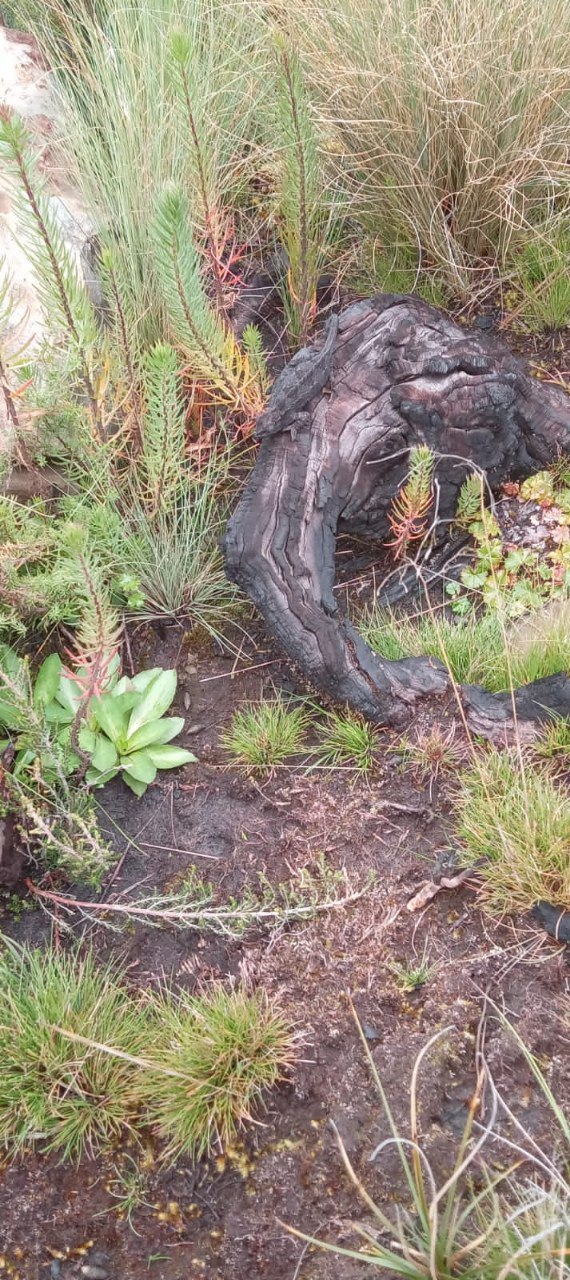
Above the forest and bamboo, between roughly 3,000 and 4,000 metres, the landscape opens into heath and moorland, and this is where Mount Kenya’s most famous plants take over. Giant groundsels, known scientifically as Dendrosenecio, can reach up to 10 metres tall and look almost prehistoric, like a cross between a cactus and a tree, with thick, insulated trunks adapted to survive nights below freezing. Giant lobelias, growing up to 6 metres, are equally strange: spire-like flowering stalks covered in fine hair for insulation, some species flowering only once in their lifetime before dying.
Both plants are part of a small group of giant rosette species found only on East Africa’s high mountains, nowhere else in the world, which makes this stretch of trail genuinely unique rather than simply scenic.
This is also prime territory for the scarlet-tufted malachite sunbird, a striking high-altitude bird that feeds specifically on lobelia nectar, along with the tacazze and golden-winged sunbirds adding flashes of colour against the muted moorland. Overhead, augur buzzards and the occasional lammergeier, or bearded vulture, ride the thermals above the open ground.
| Zone | Look out for | Altitude |
| Forest & bamboo | Buffalo, elephant, colobus monkeys, trogons | Below 3,000m |
| Heath & moorland | Giant groundsels, giant lobelias, sunbirds, augur buzzard | 3,000–4,000m |
| Alpine & summit zone | Rock hyrax, alpine chat, lammergeier, glaciers | Above 4,000m |
Alpine Zone and Summit: Hardy Survivors
Above 4,000 metres, conditions become genuinely harsh: intense daytime sun, freezing nights, and thin air. Few large mammals live here, but rock hyrax, a small, sturdy relative of the elephant despite looking more like a large guinea pig, are commonly seen sunning themselves on boulders near camp. Birdlife thins out but doesn’t disappear: white-necked ravens and alpine chats are regular companions near the high camps, often bold enough to investigate an unattended lunch.
Scattered giant groundsels and lobelias persist even this high, smaller and more isolated than lower down, a reminder of how specifically adapted these plants are to the mountain’s extreme daily temperature swings.
A Mountain Worth Slowing Down For
It’s easy to treat the trail as something to get through on the way to the summit, but Mount Kenya’s wildlife and plant life genuinely reward a slower pace and a few extra minutes of looking around at camp or during rest stops. With around 5,000 recorded plant and animal species on the mountain, and several found nowhere else on Earth, there is a strong case for treating this as a wildlife and botany trip as much as a summit trek.
Mount Kenya Hiking’s guides are as familiar with what’s living on the mountain as they are with the trail itself, and are always happy to point out species along the way. Get in touch to plan your route, and bring a little extra time to look around once you’re there.
See where these species occur in our Mount Kenya vegetation zones guide, then choose a trail in the routes guide.